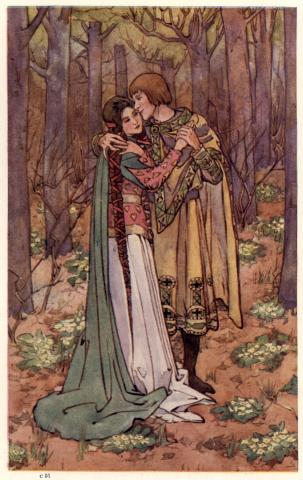
Just as in modern media, medieval literature was comprised of motifs and tropes, recognizable patterns that allowed for interpretation and analysis. “The Fair Unknown” began as an individual character in the late 12th or early 13th century French poem Le Bel Inconnu by Renaut de Beaujeu. In this poem the as-yet unknown Sir Gingalain has been raised by his mother in secrecy, unaware of his paternal lineage. Coming across the body of a knight in the forest, Gingalain releases his deepest desire is to become a knight in turn.
Gingalain’s progress from the unknown Sir Le Bel Inconnu to Sir Gingalain pairs with the revelation of Gingalain’s true parentage: the knight and cousin to King Arthur, Sir Gawain. The University of Rochester’s Camelot Project summarizes the trope’s expectations thus:
Initially appearing in court without an established identity, the Fair Unknown nevertheless boldly demands to be knighted. He tends to be markedly — albeit amusingly — uninhibited because of his isolated upbringing, and frequently knows little of his own paternity. Although he is quickly knighted, the Fair Unknown must prove his worth through an extended series of adventures before finally cementing his position within society through continued proof of his prowess and, ultimately, through marriage and the acquisition of property. Within the Arthurian tradition specifically, the Fair Unknown is usually discovered to be a relative of Gawain and, thus, related to Arthur himself. He must, therefore, prove himself worthy of being not only an Arthurian knight, but also Gawain and Arthur’s kinsman.
“The Fair Unknown” adapted from an essay by Leah Haught and can be found here: https://d.lib.rochester.edu/camelot/theme/fair-unknown
This trope has survived to contemporary literature and media, and you will likely recognize it. Let’s discuss some film and television characters I feel fit the mold and are likely too be recognizable.

If you’ve seen 2001’s The Fellowship of the Ring, then you might recognize this man. Prior to Frodo and company (and therefore the audience) learning Strider’s true identity, all we know of this man is his imposing and half-hidden figure in the back of a tavern. He springs into action quickly when Frodo uses the Ring in public, using years of skills to deftly remove Frodo from the public eye, plan a diversion for the approaching Ring Wraiths, and keep Frodo and co. safe until they can reach Rivendell.
By the end of the trilogy, Stider, whose true name is Aragorn, becomes the High King of Gondor and mankind, through both his royal bloodline as the descendant of failed King Isildur, but also through his prowess as a fighter, tactician, and leader.

More recently, the character Jon Snow appeared on HBO’s Game of Thrones.
We first meet Jon Snow as the bastard son of Ned Stark, semi-adopted into the Stark household, but not truly a part of the family. Ned’s wife and legal children, though of an age with Jon, bear the Stark name. Jon, as a bastard, receives the name given to all fatherless children of the North, Snow.
He was raised with the Stark children, though always aware of the significant gap between them, even if they are his half siblings. The legal birth of heirs was a big deal, and any children born outside the bounds of marriage bore the brunt of their parent’s sins through loss of class standing, financial support, a chance at education, etc. Jon’s path as a bastard takes him to the Brotherhood of the Night Watch, set to guard the Kingdom’s northern boundary from the wilds that lie beyond.
Jon quickly proves himself a fast learner, adept at both the sword and the word. He had been raised alongside the legitimate Stark children after all, and benefited from the formal education and martial training. He is attractive, well-meaning, and intelligent, with a sense of honor that runs deep. Of course, we find out the long-running secret identity of Jon’s mother is not, in fact, an unknown serving woman Ned Stark seduced months after his marriage, but Ned Stark’s sister, Lyanna. His father? The previous heir to the throne, Rhaegar Targaryen. Jon wasn’t a bastard after all, but royalty.

Most recently of all is Rey Skywalker* from the Star Wars sequel trilogy films. Rey spends the bulk of the new Star Wars sequel trilogy of unknown origin, found on a desert planet and roped into a galactic war somewhat by accident. And yet, she adapts to the new skills well, as she has learned how to survive alone on a desert planet all these years. It makes sense to me that she can wield a lightsaber well quickly, as well as the addition of Force sensitivity to improve things like reaction times. She’s a natural pilot, clever, if brash, and fulfills the role of Fair Unknown beautiful when it is ultimately revealed that her inherent power comes from her lineage: she is the granddaughter of the Sith Lord Siddeous, also known as Emperor Palpatine.
In these examples, the “true” identity of the character is only revealed later. Either they have purposefully concealed, or had concealed from them, their own identity as a powerful person and instead had the opportunity to show their prowess first, before their credentials are otherwise established. Their abilities are almost retroactively justified; of course Arargorn is allowed to become the King of Gondor in the end, he’s been presented as an example of chivalry in action. He spent all those years defending the weak or unwary as Strider, he accompanied the Hobbits to Rivendell and beyond, and undid the sins of his ancestor by giving Frodo the chance to destroy the ring while Mordor’s army was occupied with Aragorn’s.
While I appreciate Jon Snow’s arc (mostly), I’m still not over the final season and half, I really don’t think Winds of Winter will ever be published and even if it is I won’t read it (this IS a Martin slander account btw) and I can’t get into the completion of Jon’s arc without devolving into a rant about GoT so just trust me on this. He started a no one, but he never really was nobody. His deeds and actions serve as the sort of resume for the revelations of his bloodline.
Or at least, that’s how the trope began. It’s a massive oversimplification, and were this an academic essay I would elaborate, but in general, characterization in medieval literature was fairly simplified. Beautiful people were good, and those with physical deformities or differences represented something bad or evil. And your bloodline? That was more important than almost everything, because your blood, your Nobility, reflected your status. God wouldn’t have created you to be a King if you weren’t worthy, and if God made you a peasant? Well, He had a plan.
There were exceptions, of course, and the social ladder could be climbed in certain ways. For young men, they could become knights if they had the opportunity to prove how exceptional they were, which is what allows the Fair Unknown trope to function.
My favorite knight of the Round Table is Sir Gareth of Orkney, one of Gawain’s younger brothers and therefore nephew to King Arthur, as told by Thomas Malory in the 15th century Le Morte d’Arthur (The Death of Arthur). Gareth comes to Arthur’s court disguised as a servant, asking for a chance to prove himself and be knighted by Launcelot. Of course he is successful on his quest, wins himself a high-born wife, and is indeed knighted by Launcelot. It is after these deeds that his identity is revealed, reconfirming to all that Gareth’s abilities make sense, he’s Arthur’s nephew after all, and Gawain’s brother.
If Gareth had not been raised as royal, he would not have received the necessary skills to sit a horse and complete his quests, of course his revealed identity is one of Nobility. Now, it doesn’t always happen where you can make that assumption, take Chrétien’s 12th century creation of Percival:
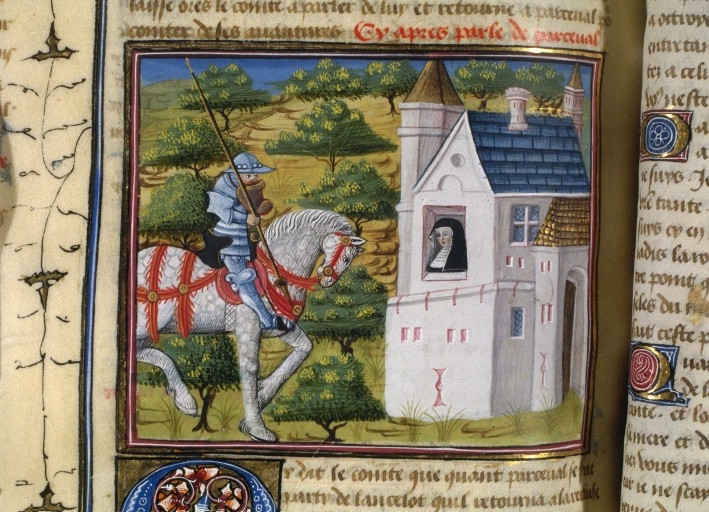
Perceval is raised in seclusion by his mother in the forests of Wales and decides he wants to be a knight after encountering a party of them in the forest for the first time. He leaves his mother to seek King Arthur’s court, where he demands to be knighted and proceeds to complete a number of feats he shouldn’t have been able to, without training, such as defeating an enemy of Arthur’s that his other knights have not been able to dispatch. Perceval is young and brash, and certainly has a lesson to learn in his tale, but the justification for his prowess is not, in the original work of Chrétien’s, relegated to a secret bloodline. He is, however, attractive, powerful, athletic, and able to quickly adapt to the physical role of a knight despite his secluded upbringing.
It seems to me that the Arthurian narratives are more likely to emphasize the importance of your bloodline than the other medieval courtly tales. Arthur himself, in many of the narratives, spent his childhood unaware of his true lineage, only to be revealed in a time of great need for a King. I am not sure what the connection there is, and would have to spend some time seeing who has written about it before, before I could make more specific commentary in this regard. It’s just a connection I have made that I want to share and continue thinking about.
*If that was a spoiler I’m sorry but it’s been a few years, y’all
Final Thoughts
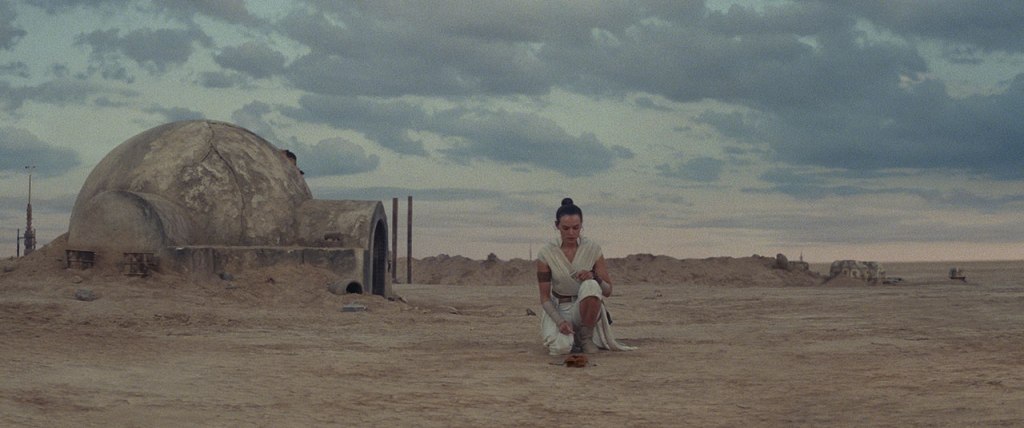
The Fair Unknown Trope is common enough to be recognizable, and used by contemporary authors in new and different ways to begin speaking about the importance of action vs. birth, classism, ableism, and beyond. As a modern thinker, I know my birth has nothing inherent to do with my ability, but the lack of equitable access to education and training does have a profound impact on who can succeed or not in this country today. If the Fair Unknown trope feels like a bit of a let down to you, like it does to me, because it often stems from a place we cannot control, that’s a fair reaction. It seems like a foregone conclusion half of the time, and that’s the beauty of literature, because now that we know what the pattern should look like, we can look at the places where it breaks from that form. In Lord of the Rings Aragorn isn’t the primary protagonist or hero, Game of Thrones’s Jon Snow doesn’t gain a throne at the end, and Rey Skywalker in Star Wars seems to walk away from the legacy she claimed, burying the former Skywalkers’ lightsabers in the sands of Tatooine. What do these breaks from the “proper” trope say about the characters and their development? You tell me, that’s half the fun of being an English Lit student.
 Queerly Beloved
Leave a comment