It’s week 2 of June, aka LGBTQIA+ Pride month, and I’ve already posted a handful of articles relating to the queer experience, as I see it. Last week I shared reflections about coming out as transgender at nearly thirty, thanks to the visible representation of Elliot Fletcher on Shameless; thought about the various ways you can love someone close to you by examining the relationship models in Steven Universe; and talked about the harm of queerbaiting in contrast to the relentlessly queer Our Flag Means Death. Today, I want to look at one of the adorable found families in Star Trek: Discovery.
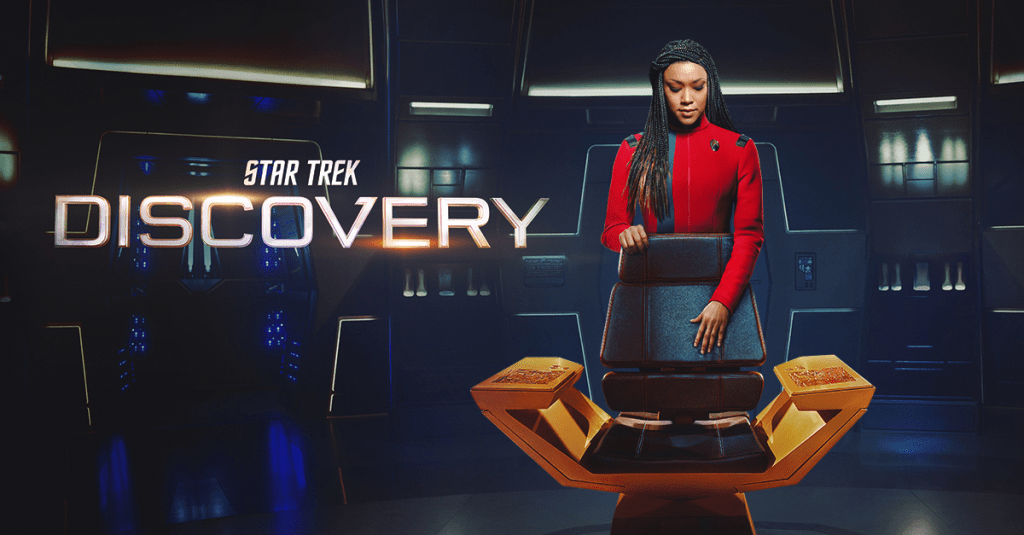
Disco is a different kind of Star Trek, and the focus on familial relationships forged throughout the series is at the forefront. Michael Burnham, the series’s main protagonist, is the adopted human sister of Spock, brought in to the family by Sarek when she was orphaned at eight years old. Season 2 spends a lot of time analyzing the relationship she shares with her semi-estranged brother Spock.
I absolutely love the show, and am impatiently waiting for Season 5 (which has been confirmed, though not filmed as yet). There are so many important moments to me, but the love at the center of all Michael’s decisions carries through the entire crew. Also notable with Disco, the inclusion of the first openly same-sex couple as part of the main series: Commander Paul Stamets and his husband Doctor Hugh Culber.
Stamets and Culber do not have the easiest time in their relationship through Disco’s four seasons, but I appreciate the nuanced portrayal of their long standing relationship. It is clear they are affectionate and in love with each other, as they are consistently shown on screen together making casual touches to each other’s arms, giving each other an affectionate kiss hello or goodbye, the casual ways you interact with a loved one subconsciously after spending so much time together. The show also never presents them as a diversity moment, they’re introduced as characters through the course of their very important jobs: Stamets is the ship’s chief engineer, while Culber is the chief Doctor on board, later adding counseling and psychology services to his retinue. Their relationship is mentioned by characters occasionally, but only in the way you might bring up a friend’s spouse, especially if you’re friendly with both people. There’s never a “Hey look, Commander Stamets is GAY and here is his HUSBAND also on the ship!” moment, which makes the depiction more valuable to me.
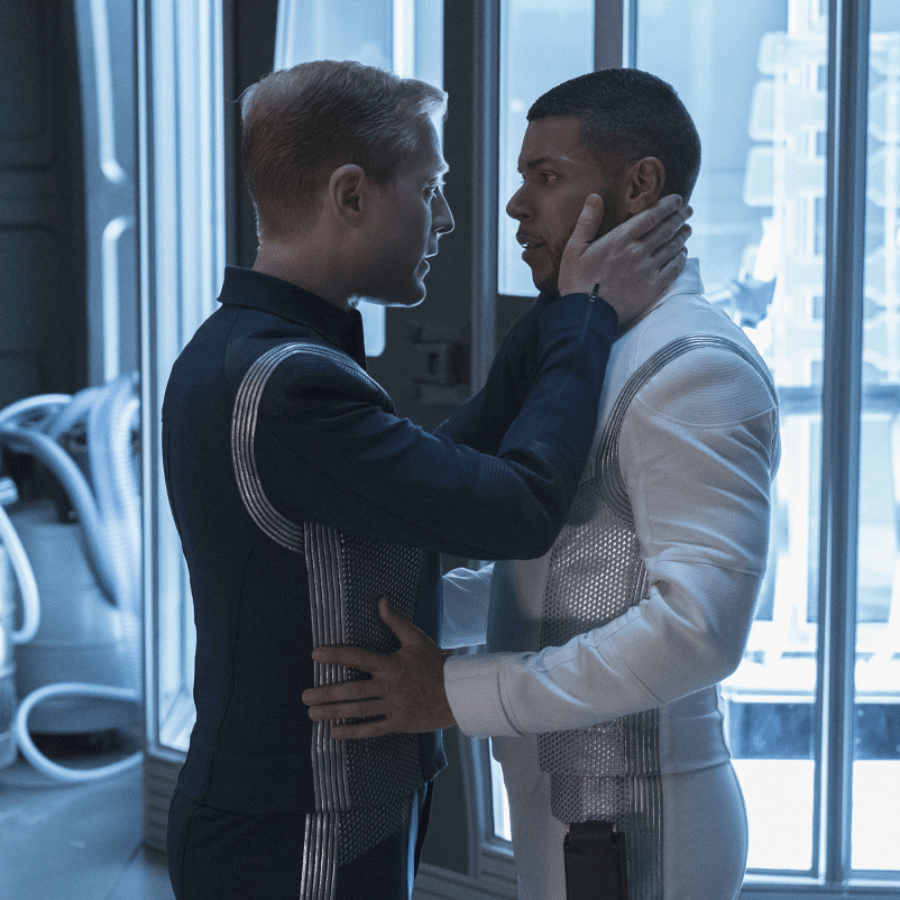
Now, (spoilers abound from now on, if you haven’t gotten past mid season 2) the end of season 1 came with Culber’s “death.” While this death was eventually revealed to be impermanent, there was a bleak moment that felt like Star Trek was utilizing the bury your gays trope-getting the credit for including the character, but killing him off quickly as the “least” or “lesser” valuable character. Whatever the reason for the death in the moment, the show did rectify this issue by bringing Culber back to life.
And then Adira joins the team. A teenage human, joined to a Trill symbiont, Adira is in a unique position. Adira first bonds to Stamets, who has been known to be gruff and hard to work with up to this point. However, Stamets recognizes something in Adira, and encourages their natural intelligence and skills to be used on the Discovery. It is to Stamets that Adira first confirms their pronouns should be “they/them,” the second person Adira had ever told about their non-binary identity (their late boyfriend Gray Tal being the first). It’s beautiful the way Stamets smiles and accepts this news, and then never misgenders them ever again.
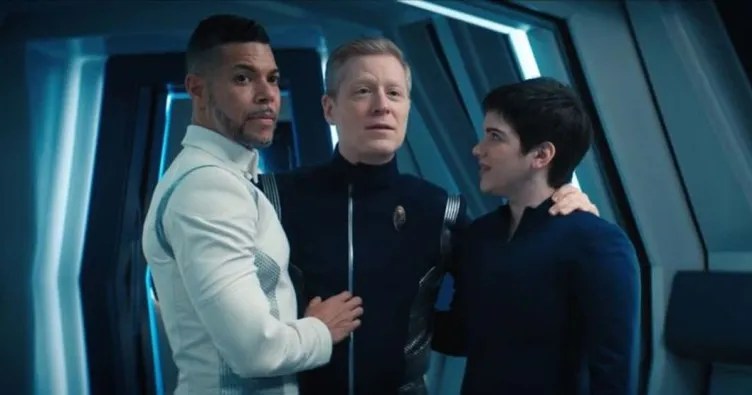
In a gorgeous moment of cohesion between spouses, when Culber joins Stamets and Adira after this revelation, Culber picks up on Stamets’s cue, using they/them to refer to Adira thereafter without being asked to. Adira is an orphaned teenager, the unconditional acceptance Stamets and Culber show to them clearly helps their continued development, as they are often more confident and capable after a pep talk from either man. Stamets confides in Culber one night that he feels like he recognizes something in Adira, that they have lost their love as he one did, and that he thinks he can help. Culber encourages this, and becomes an additional resource for Adira.
Culber has his opportunity to additionally help Adira, and their partner Gray, beginning at the end of Season 3. When Adira begins seeing Gray, conversing with him, though no one else can see him, they worry what it could mean for Gray’s consciousness. Stamets and Culber accept without question that Adira can see Gray, and will often speak to the empty hall where Gray is supposed to be standing, indicating their belief and support for the teenagers.
An away mission to a dying ship changes everything. The holographic system on board recognized Gray’s being, creating a physical form for him visible by everyone, including Culber. Everything makes sense to Hugh in this moment-after all, he had only survived his own death through the science/magic of the mycelial network (the mushroom spore network adapted by Stamets to travel through space faster than warp) and knew it was possible to revive the soul of a person trapped between life and death.
Ultimately, through the assistance of the Trill home world Guardians and scientist Altan Inigo Soong (yes, of that Soong family line), Culber is able to create a golem form for Gray to inhabit. It is during the study of this body that Gray casually reveals he is transgender: noticing the mole on his hand he says he would have removed it before his death, but transitioning took all of his energy. This is not a reference to joining with the Trill symbiont Tal, which happens after. Gray had been introduced in season 3 as male, as Adira’s late boyfriend, with no mention of his transgender identity. It’s only through casual commentary like this that his identity can be revealed. I liked that, too. I find myself occasionally referencing my past in this way, more often the longer I’ve been socially transitioned.
Hugh, Paul, and Adira become a family unit throughout the end of Season 3 and during Season 4. Not just because Paul recognized the loss and sadness in Adira, while Culber could relate to Gray and understand what it meant to lose yourself in such a way, but also because of the deeply loving nature all three carry. They’ve all been traumatized by love and loss, and can find comfort and understanding in each other.
So much of Disco’s plot in season 3 revolves around questions of isolation and loneliness-which I feel to be a callback to Roddenberry’s original quote:
In a very real sense, we are all aliens on a strange planet. We spend most of our lives trying to reach out and communicate. If during our lifetime we could reach out and really communicate with just two people, we are indeed very fortunate.
Gene Roddenberry
The crew of the Discover find themselves in the far future, alone save each other, at the start of season 3. After 2 seasons of intense plot and world-building, they function as a team, as a family. Michael uses the word family often to speak with Starfleet Command in this future, referencing the cohesive manner in which her ship relies on each other and supports each other. It’s no stretch to see the creators of the show felt the same way. Season 3’s closing monologue from Michael Burnham wraps with the above quote displayed on screen, a reminder that at the core of each of us, we seek connectivity and companionship. We seek love.
Honorable Mentions
If Adira is unofficially adopted by gay space dads Culber and Stamets, they also gain a gay space aunt in Commander Jett Reno. A widower, Reno’s wife had passed a few years ago, but she doesn’t let that stop her from loving and supporting Adira. Reno is often the one who assists Adira break a rule for the greater good.
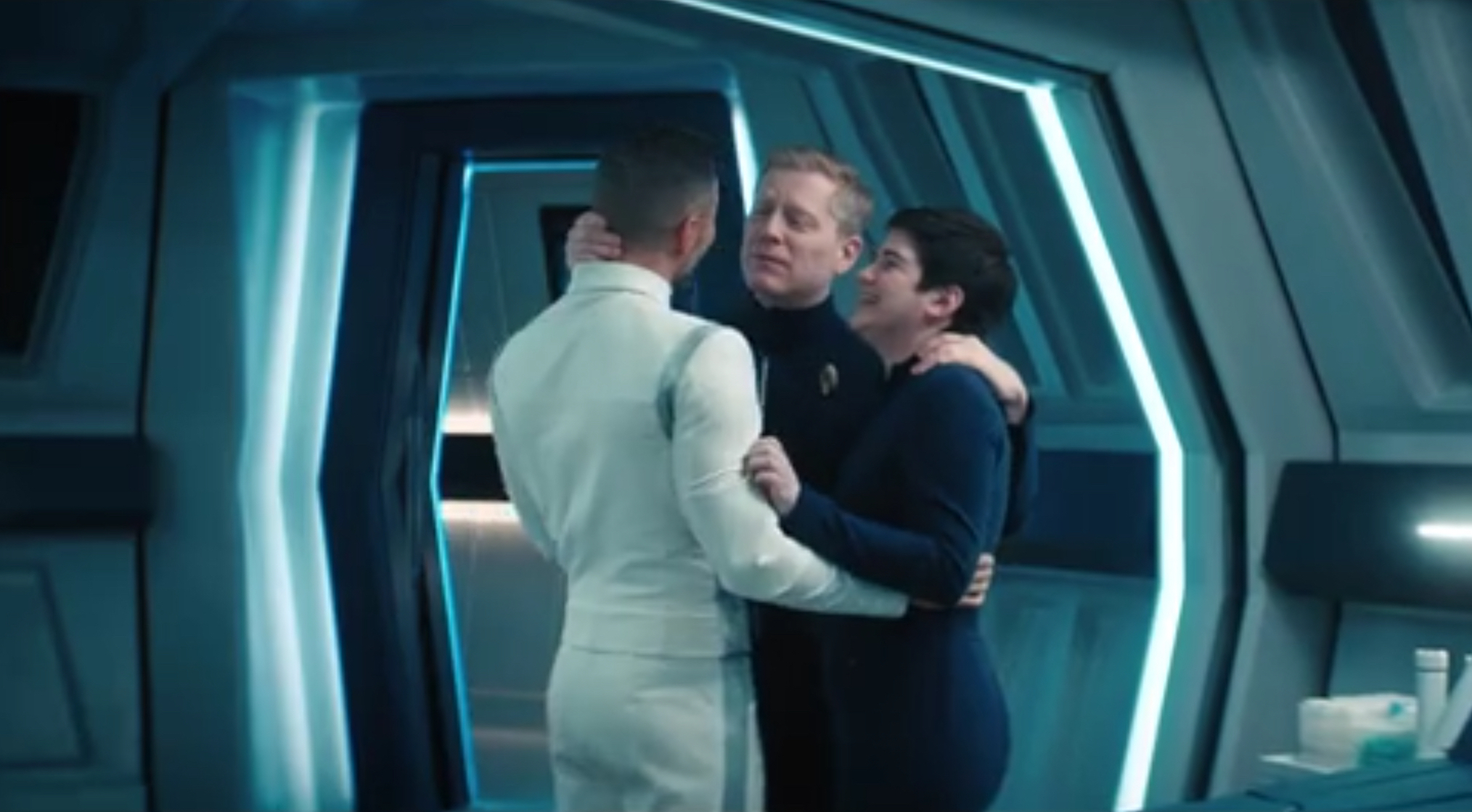
What Culber, Stamets, Adira, Jett, and Gray represent is the kind of inter-generational queer found family that many of us find recognizably parallel to our own lives. Adira was orphaned, lost, unsure in their own identity, and now without even the one person who knew who they truly were. Stamets and Culber have been through an insane amount of personal and romantic trauma, Jett is likewise alone and bereaved, and Gray? Gray went from being a symbiont, to dead, to alone except for Adira, and Culber allowed for him to have life again. Adira knew giving Gray his body back meant he would leave to the Trill home planet to resume Guardian training, but their love for Gray means giving him the chance, even if that means parting. Adira is sixteen, still young enough to need the parental love they’ve been lacking. All five of them needed the connection of other people, needed the love and established familial relationships they could create when they found each other, and it’s incredibly profound.
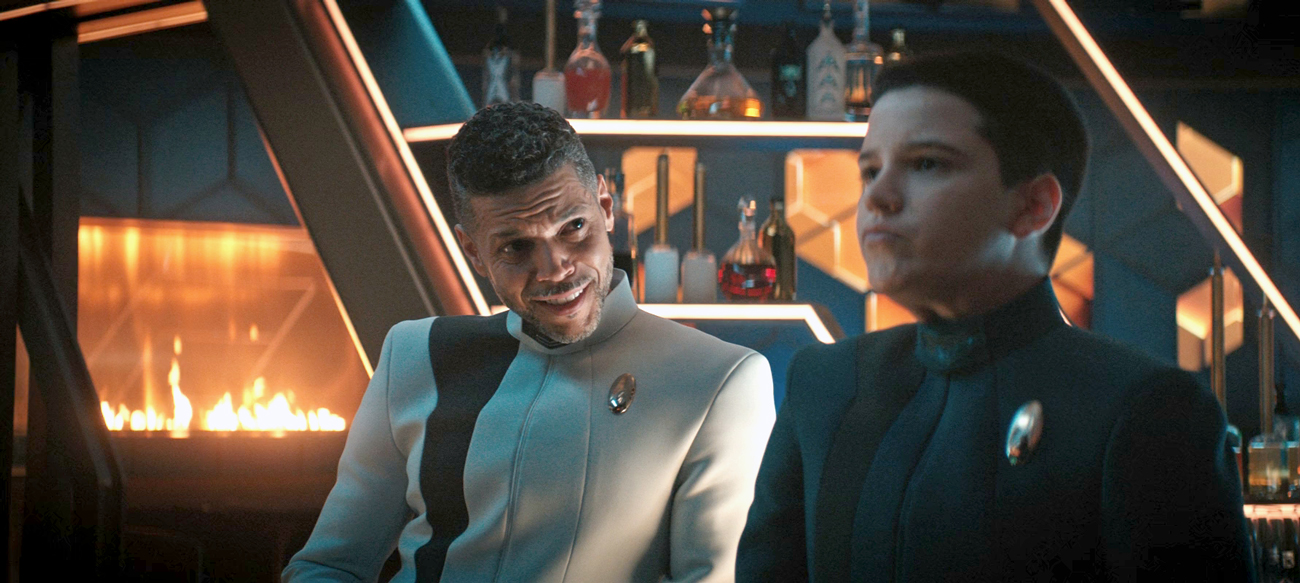
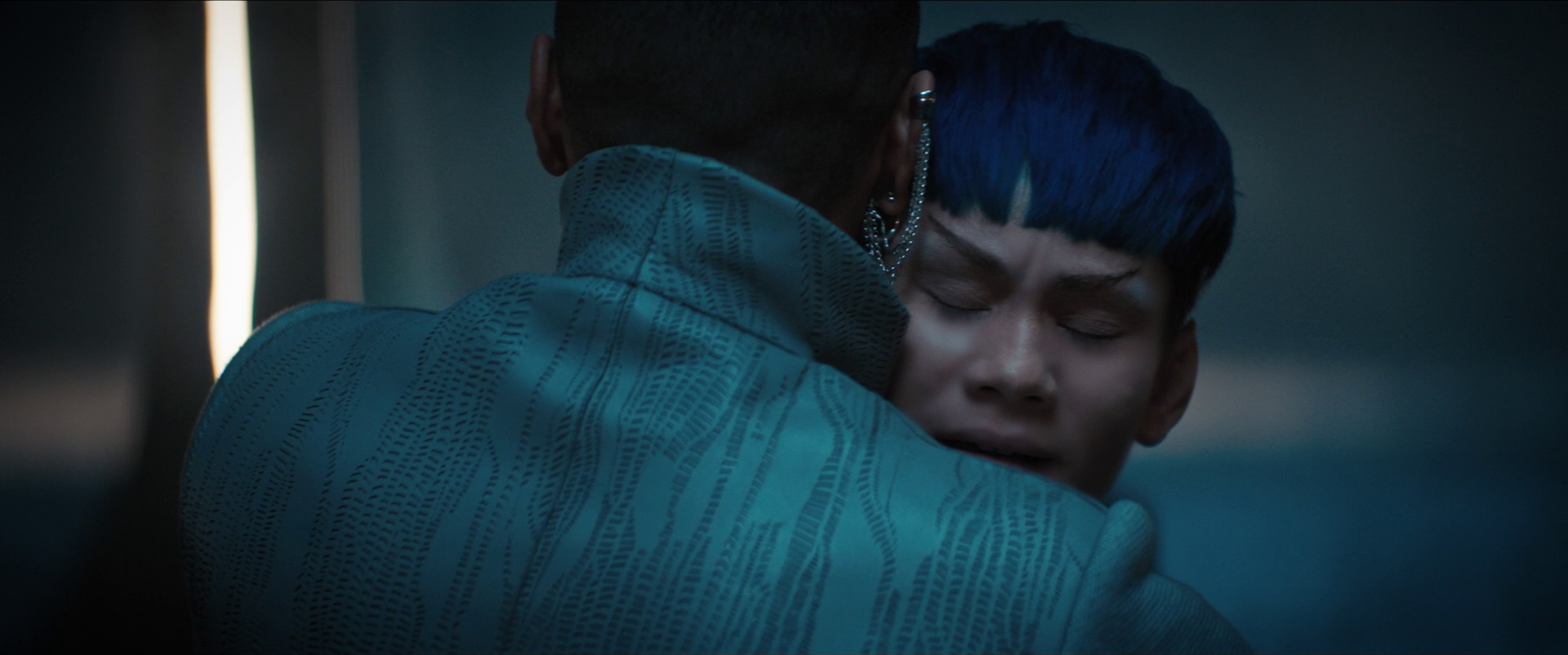
Finally, have a gallery of Adira having proud parents, I couldn’t choose just one to include for the article, so you get to see them all.
 Queerly Beloved
Leave a comment