The Life and (Medieval) Times of Kit Sweetly is a 2020 YA novel from Jamie Pacton; discussing the novel opens some interesting conversations about gender, knighthood, and historical accuracy.
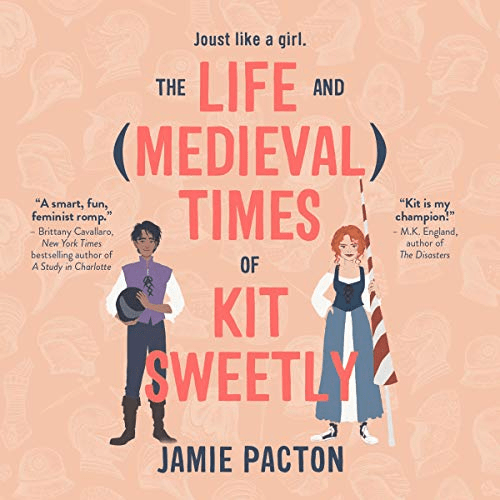
Kit Sweetly is 17 years old, obsessed with the history of the Middle Ages, and currently works as a serving wench at a Medieval Times knock off with her brother and closest friends. Her aspirations go beyond that of wench, however, as she attempts to convince the owner/manager to allow her a role as Knight-a role that can only be performed by men, per company policy. Her brother Chris is the Red Knight, but a lovers’ spat before showtime results in injury. If Chris does not perform, he will lose his job. Queue Kit, who knows every bit as much about Knighthood as her brother, and has the skills to back it. Donning her brother’s armor and covering her face with his helmet, Kit steps on to the field at last. Of course, we’ve heard this story before, haven’t we?
Shakespeare’s Twelfth Night begins with a shipwreck, casting twins Viola and Sebastian apart. Viola assumes her brother’s identity for a time, hijinks ensure, etc., etc.
More recently 2006’s She’s the Man adapts to the modern-Viola and Sebastian are collegiate soccer players. When the female team is cut for funding issues, Viola takes on her brother’s identity to remain playing the sport she loves. I haven’t watched it in years, so I’m not sure if it holds up at all, but I did love it at the time.
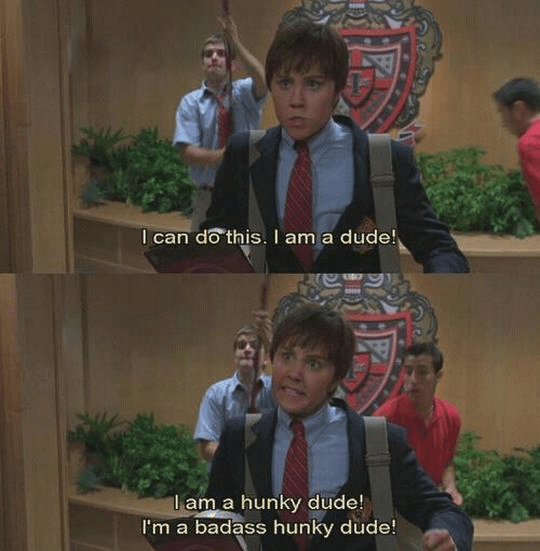
Typically the dramatic tension in these adaptations comes from the secrecy. Viola cannot tell anyone her true identity for a variety of reasons, which adds to the confusion as infatuations and mistaken identity begin to play out. There’s always this heavy hanging anxiety lingering, for me in the audience, because I know the happy ending has to go through some really nasty bits first. The identity has to be revealed, and that is not always handled well.
For instance, in She’s the Man when Viola needs to prove she is actually Viola at the end, she does so by flashing her boobs to the audience. I understand that on film especially, with limited time to convey a plot point or twist, there are limited ways to visually indicate to the audience that identity is now revealed to everyone else. But, flashing? Allow me, as someone who was in the possession of massive tits until 2 years ago, remind y’all that the presence of boobs does not actually indicate gender, no matter what the director is trying to convey. It’s insensitive at the very least, and I think we can be more creative and kinder with these kinds of revelations, in the future.
It’s not like the costuming was immaculate, it was fairly accurate to what Viola would have access to as a college student, no special makeup or anything.
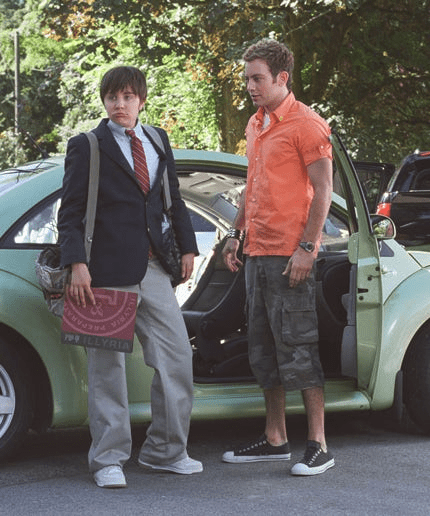
Viola wears baggier clothes, keeps her hair short, and attempts to “act” more masculine. She attempts to relate to her male roommates, including Channing Tatum, in increasingly absurd and comedic ways.
I love the above scene, because, while it’s played for laughs that tough guy Duke (Tatum) is also scared of the spider, it’s a reminder that despite their differences in gender, there’s not an inherent response preloaded into our brains.
Turning to Kit Sweetly and her attempts to become a Knight-
The expectation for Twelfth Night inspired narratives would be to drag out the drama of the secret. Kit, however, has no such intentions. She wins her joust, rips the helmet off her head, and: “‘I AM NO MAN!’ I yell. It’s my favorite line in all of The Lord of the Rings, and I deliver it perfectly.” Gotta love including multi-layered fandom references.
Now, this is all part of the set-up for the novel. The point is not that Kit has this secret identity as a Knight. Like the Viola’s before her, Kit wants something denied to her solely on the basis of sex. There is no logical or historical basis for denying women the opportunity to work as Knights, as she has informed her manager, and yet she is barred. Rather than fit in to the secrecy, as Viola did, Kit breaks from that tradition. Perhaps it is because The Life and Medieval Times… is from 2020, a much more recent publication. YA novels in particular have increased diversity and inclusivity in recent years; I’ve been thrilled with the vast majority of titles read from the YA or New Adult categories. Kit reveals her identity because it is important. She proved she could handle the job, and then she reveals who she is rather than lie about it. It is an injustice that bars her from knighthood, and she will only step into the role when everyone who wants to can join her.
Because this is what these arguments boil down to. Kit’s boss insists women did not fight as knights in the Middle Ages, and uses that historical background as the justification to deny her, and others, a chance to perform a job that pays better, based solely on sex. However, if historical authenticity were truly the requirement for all hiring decisions, first of all, there still could be a female Knight. There were certainly women warriors throughout history, and https://www.medievalists.net/2014/07/ten-medieval-warrior-women/ can tell you more about some of them.
Regardless, there is already a large amount of anachronistic history taking part at venues such as Medieval Times. The Castle location in the Chicagoland area, which is also where Kit happens to live, is supposed to be based in medieval Spain. The FAQ page reveals the historical basis for their show to be based on a real family in 11th century Spain, but are scare on details beyond that. However, while they have pages dedicated to informational materials regarding the Middle Ages for teachers and students, the vast majority of the details are highly anachronistic. We cannot be truly medieval, because many of the details that would add authenticity would either feel false (have you heard of the Tiffany Problem?) or would be unpalatable for a modern audience. I like electricity, running water, and silverware, for example. So, I guess my point is, if we cannot be perfectly “accurate,” even if we know that accuracy is also false, shouldn’t we be, I don’t know, inclusive? You’re really telling me that the presence of a woman or even a non-masculine presenting person as a knight would be enough to violently jar the audience out of the submersion? Did you know Medieval Times serves corn as part of their dinner? Did you also know corn was not readily available in Spain in the 11th century? It wasn’t until Columbus brought corn back with him at the end of the 15th century that corn began to be cultivated in Spain. So, we can include corn, but not treat actual living people fairly, in case we’re being “inaccurate.” Sounds fair.
Perusing the open jobs for the Medieval Times company reveals a sinister connection to the world of Kit Sweetley, though. Under the open position for “Squire” which is required to advance on to “Knight” is this caveat:
Please note: To preserve the authenticity and genuineness of the scripted role of Knights in the Medieval Times theatrical production, Knights positions are reserved for male performers. Because Knights positions are filled exclusively from the ranks of Squires who have trained at Medieval Times to become Knights, the role of Squire is likewise reserved for male performers who are evaluated at the time of hire as demonstrating the potential for advancement to a Knight position.
http://www.medievaltimes.com
They can get away with discrimination lawsuits and the like because they list their employees as performers in much the same way restaurants like Hooters list their waitresses as entertainers/performers to ensure their ability to hire based on appearances. A performer does not get the same workplace rights an employee might, because acting roles do have legitimate reasons to specify gender/age/race/etc. for characters, some of the time.
Kit’s focus is therefore not on pretending to be her brother throughout the course of the novel, but on getting her place of employment to understand that their position is untenable, unrealistic, and unfair. It gets more insidious as it goes on, too. You see, I’m a trans man, and sometimes I worry about gender segregated events. I lack ALL of the skills to be a knight, but would I be able to apply, if I had them? According to Kit, nope! “Company policy is that only cis men can be Knights.” Well, that’s brutal on more levels.
Fun fact, Kit points out that the official sport of Maryland is jousting, and this is true! Since 1962, when MD became the first state to adopt an official sport. Taken directly from their webpage: “Jousting tournaments have been held in Maryland since early colonial times but became increasingly popular after the Civil War. Retaining the pageantry and customs of medieval tournaments, modern competitors are called “knights” or “maids”, and many dress in colorful costumes. Men, women and children compete equally with skill and horsemanship determining the class.”
I feel like, if Maryland can allow people of all ages and genders to compete in their official State sport, while clearly still valuing and prioritizing adapting chivalry and knighthood to the modern era, something as inherently anachronistic as a themed restaurant should be able to adjust expectations, as well. Clearly, Kit and her friends agree. Kit spends the majority of the novel prepping with other employees barred from fighting as Knights.
“This is about my friends and me getting a chance to be ourselves. It’s about fighting against inequality and showing the world that gender shouldn’t be a bar for any job these days. And it’s about taking a battering ram to the notion that the heroes of the Middle Ages were all men.”
The Life and (Medieval) Times of Kit Sweetley, Jamie Pacton, page 343.
Kit gets a happy ending (look, if that’s a spoiler I really don’t know what to tell you, campy YA novels are supposed to get happy endings), with the Castle allowing people of all genders to work as Knights, if they want to.
In real life, that kind of change seems hard-won, despite a whopping 77.4% of equestrian athletes in the USA being female. While equestrian skills are not inherently the same as those for the joust, the adjustment to ring games is one that could be made. With such large percentages of women in this country having the access to and the training for such skills and equipment, why are only men allowed access to the higher paying performance jobs, on the basis of “historical accuracy?”
I’ll likely attend the Bristol Renaissance Faire this summer, as I try to every year. It’s local to me, just North of Chicago over the Wisconsin border. They also have a joust, and for the past few summers, a female Mistress of Chivalry, the Lady Cordelia.
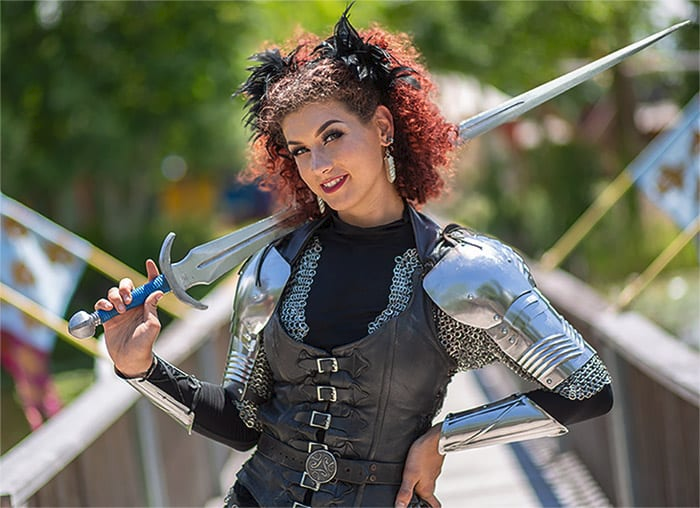
Now, while Lady Cordelia wears some armor, carries a sword, and is astride a horse during the jousting, she does not actually participate. Instead, she is the Master of Ceremonies for the jousters, explaining to the audience what happened and how many points each knight receives. She’s very engaging with the audience, and I like her very much, but it’s not enough.
I know the Knights that work at Bristol are often recurring characters. The actors that portray them return every summer, and travel between Ren Faire’s across the country. It’s not as though every year the Faire hires four completely new actors, though sometimes they might. These knights also have Squires, but I do not recall seeing any women or feminine presenting people among them in prior years. I will certainly be paying closer attention this summer.
Final Thoughts
I suppose what I really would like the take away to be is this. Historical accuracy does matter, but only in some contexts. And I do not think historical accuracy should ever be a reason to deny contemporary people access to equitable and fair job opportunities. The world is so much more varied and nuanced than we could ever imagine it to be, sticking to a strict binary with strict categories is both untrue to historical details, and unfair to real human beings.
 Queerly Beloved
Leave a comment